Plentiful
A few years ago the Tufts University newsletter included an article on the benefits of the Mediterranean diet: "Eat Like a Mediterranean to Protect Your Aging Brain." I recently took an Italian cooking class at Cavallo Cooking School at Cavallo Point resort in Sausalito, California.
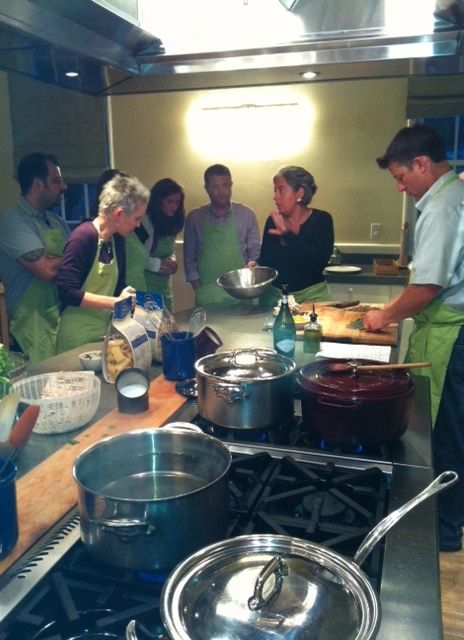
I have always respected that Italian cooking is based on local markets and seasonal produce. The Tufts article cited that "two newly published studies confirmed a 2006 finding that the so-called Mediterranean diet may protect against mental decline with aging. David S. Knopman, MD of the Mayo Clinic said the results provide moderately compelling evidence that those with the highest adherence to the Mediterranean-type diet were at 40% lower risk of Alzheimer's over 5.4 years than those with lowest adherence."
The Mediterranean style was defined as: more fruits, vegetables, legumes, cereals, fish, and monounsaturated fats (such as olive oil); less red meat, dairy products, and saturated fats, compared to the typical American diet, along with moderate consumption of red wine with meals.
Insalata di Zucchini Romane Crude (by Viola Buitoni)
- 1/4 cup almonds
- 1 lemon
- 1 handful of basil
- 6 small light green or yellow zucchini
- 1 fresh onion
- Salt and pepper to taste
- Extra-virgin olive oil
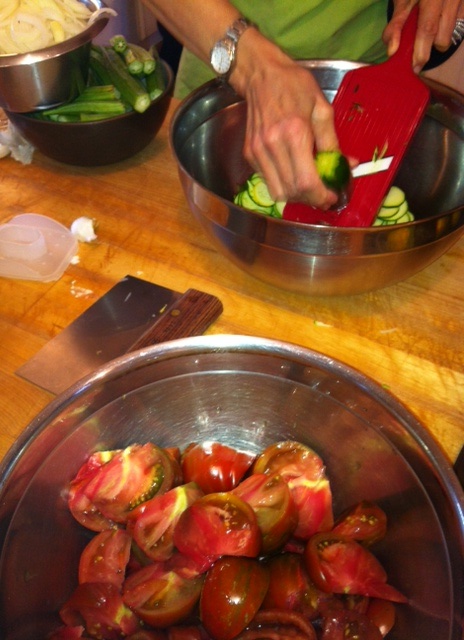
Blanch, peel, and toast the almonds. Let them cool and chop them. Squeeze the juice out of the lemon. Pick and wash the basil leaves, dry them carefully, stack them, roll them longitudinally, and cut them into thin ribbons. Using a mandolin, a shaver, or a very sharp knife, slice the zucchini and onions paper-thin into a bowl. Sprinkle with salt and douse with lemon juice. Toss well, cover, and set aside. Let stand at least 15 minutes. When ready to serve, add the almonds and basil and toss well. Dress with olive oil and pepper and toss again. Taste and adjust salt if necessary. (The mandolin does not distinguish zucchini from fingers; do use the hand guard.)
Pesto
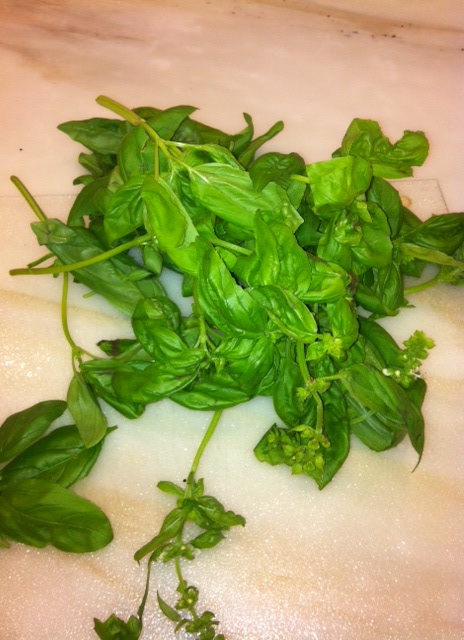
At this class we also made pesto. Three things were unique: we used a mortar and pestle to pound the ingredients, we cut the basil into thin ribbons as above, and there were no pine nuts.
- 1 clove of garlic
- 1/4 freshly squeezed lemon
- 4 oz finely grated Reggiano Parmigiano (or other high-quality Parmesan)
- 1 bunch fresh basil
- Extra-virgin olive oil to taste
Pound the garlic into a paste and place in a bowl. Add the lemon juice. Pound the basil until the leaves are not discernible and add to the bowl. Because a "bunch" of basil varies, begin with half and add the cheese. Stir in with a wooden spoon, then add as much olive oil as necessary. Having some French bread close by to taste as you mix is highly recommended.
I used Orecchiette pasta for this meal because they are small and provide a lot of surface for the pesto to coat. Sweet basil and zucchini are so plentiful this time of year. Buy bunches at your local farmer's market and make pesto to freeze for future enjoyment.
The Tufts newsletter also looked at physical activity, finding that participants with the highest level of activity were at 33% lower risk of Alzheimer's than the least-active subjects, and that this association was independent of the diet. So move, move, move. Still using my Fitbit daily, I average about 100,000 steps a week. One of my clients was very astute: he wore the Fitbit without changing anything to establish a baseline of about 2,000 a week, then began walking to work two days a week and climbing stairs, and is now averaging about 20,000. What we can quantify, we can calibrate.

Whispers of the Breath Diva:
Through conscious breathing, drink in life force. Each increment of breath is a space that opens. It fulfills and cleanses. Just like in life, small steps equal large movement. Step by step, breath by breath.